How to Write a Follow-Up Email After an Interview (Templates & Timing)
Published September 19, 2026 · MockStar editorial
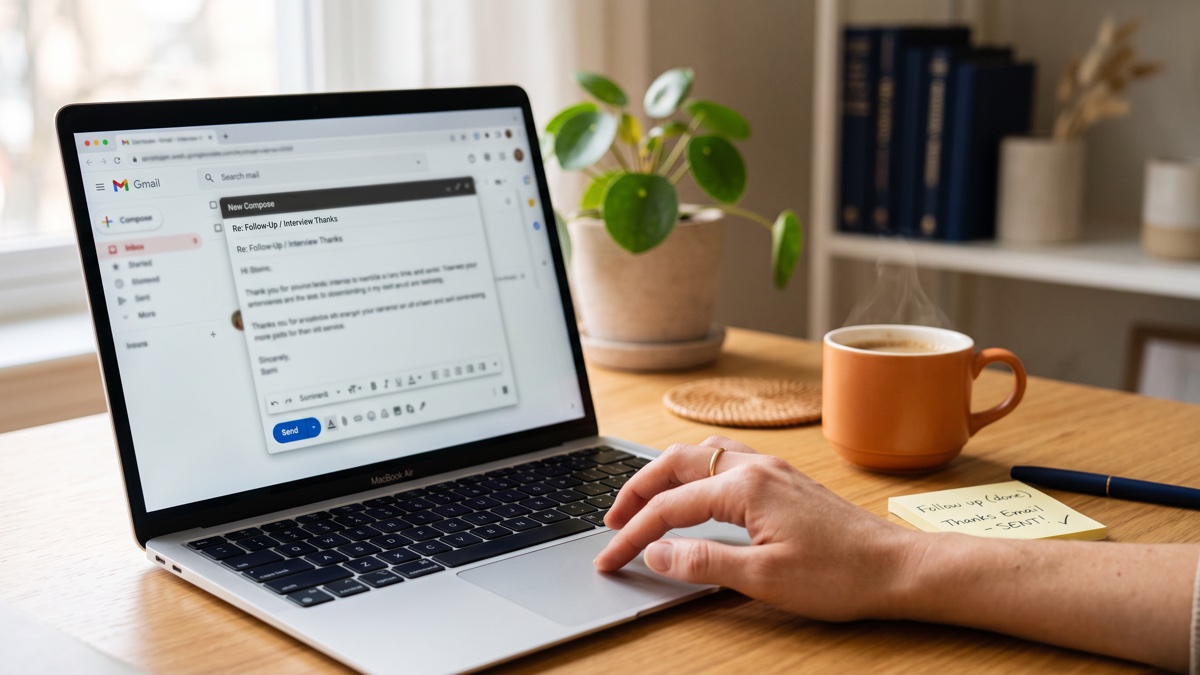
The interview ended. You said thank you, shook hands, and walked out replaying answer number three. Now comes the part most candidates either skip or overthink: the follow-up email. Done well, it is a low-effort, high-signal move that reinforces your candidacy. Done poorly — or not at all — it is a missed chance in a process where small signals break ties.
Why follow-up emails still matter
Hiring decisions are often made between near-equal finalists. A timely, specific follow-up email does three things: it confirms your interest (genuine enthusiasm is a real hiring signal), it demonstrates professional communication skills (which is itself being evaluated for most roles), and it keeps you present in the interviewer's mind while debriefs happen. Recruiters consistently report that a thoughtful follow-up has tipped close decisions — and that no follow-up is rarely held against you, but a bad one is.
Timing: within 24 hours
Send within 24 hours of the interview, ideally the same evening or the next morning. Same-hour emails can read as automated; waiting three days reads as indifference. If you interviewed on a Friday, sending Sunday evening or Monday morning is fine. If you interviewed with multiple people, send each interviewer a separate, slightly personalized email — never one group email, and never identical messages they might compare.
Anatomy of a strong follow-up
- Subject line: simple and searchable — "Thank you — Senior PM interview" beats anything clever.
- Thanks + specificity: reference one concrete moment from the conversation, not generic gratitude.
- Reinforcement: one or two sentences connecting your strongest qualification to their stated need.
- Next step: either a polite question about timeline, an offer of additional materials, or a clean close.
- Sign-off: your name, and nothing else that demands a reply.
Three tones, three templates
Formal works for finance, law, enterprise, and traditional industries: "Dear Ms. Chen, Thank you for taking the time to speak with me on Tuesday about the Senior Analyst role…" Friendly works for startups and creative teams: "Hi Sarah — it was great meeting you yesterday, and I keep thinking about the onboarding problem you described…" Concise works for recruiters and second-round logistics: "Thank you for the conversation about the role. I remain very interested — happy to provide anything useful for next steps."
Whichever tone you choose, personalize one sentence beyond the template. Mention the specific project they described, the challenge they said the team faces, or a question they asked that you have since thought about more. Interviewers can spot a pure template instantly; one specific sentence is the difference between courtesy and signal.
Mistakes that cost candidates
- Sending to the wrong name or company — fatal, and more common than you think when interviewing in parallel.
- Apologizing for answers you think went badly — never relitigate the interview.
- Asking about salary or timeline aggressively in the first follow-up.
- Writing more than about 150 words — long emails go unread and signal poor judgment.
- Following up repeatedly when you hear nothing — one follow-up, then one polite nudge a week later at most.
If you hear nothing back
Silence after a follow-up usually means process delays, not rejection. If the timeline they gave you passes, one polite nudge is appropriate: "I remain very interested — is there an updated timeline for next steps?" After that, redirect your energy: keep interviewing elsewhere and keep practicing. The best response to silence is a stronger pipeline.
Write yours in 60 seconds
Answer six fields and get a polished follow-up email you can copy — everything stays in your browser.
Generate my follow-up email